

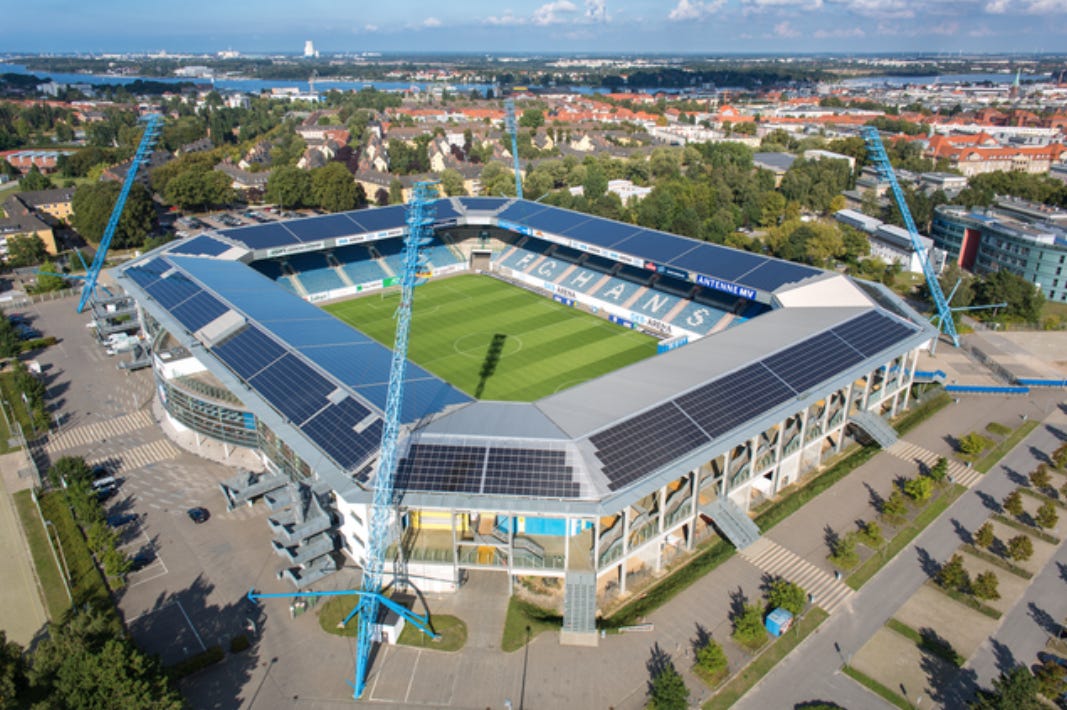
“Baltic Sea Stadium” is the English translation. The stadium got it’s name thanks to the Baltic Sea coast of which it’s shores lay upon and is home to FC Hansa Rostock. The stadium the locals broke ground upon is vastly different from it’s modern appearance, beginning with a humble capacity of 17,000 it reached a capacity of 29,000 thanks to renovations in 2001. The stadium was newly built in 2001 on the site of the former stadium built in 1954, following modern renovations and becoming a full seater stadium the current capacity is closer to 29,000. A standing terrace of 9,000 is available for Bundesliga matchdays and seats needed for international play brings that number down to 5,000.


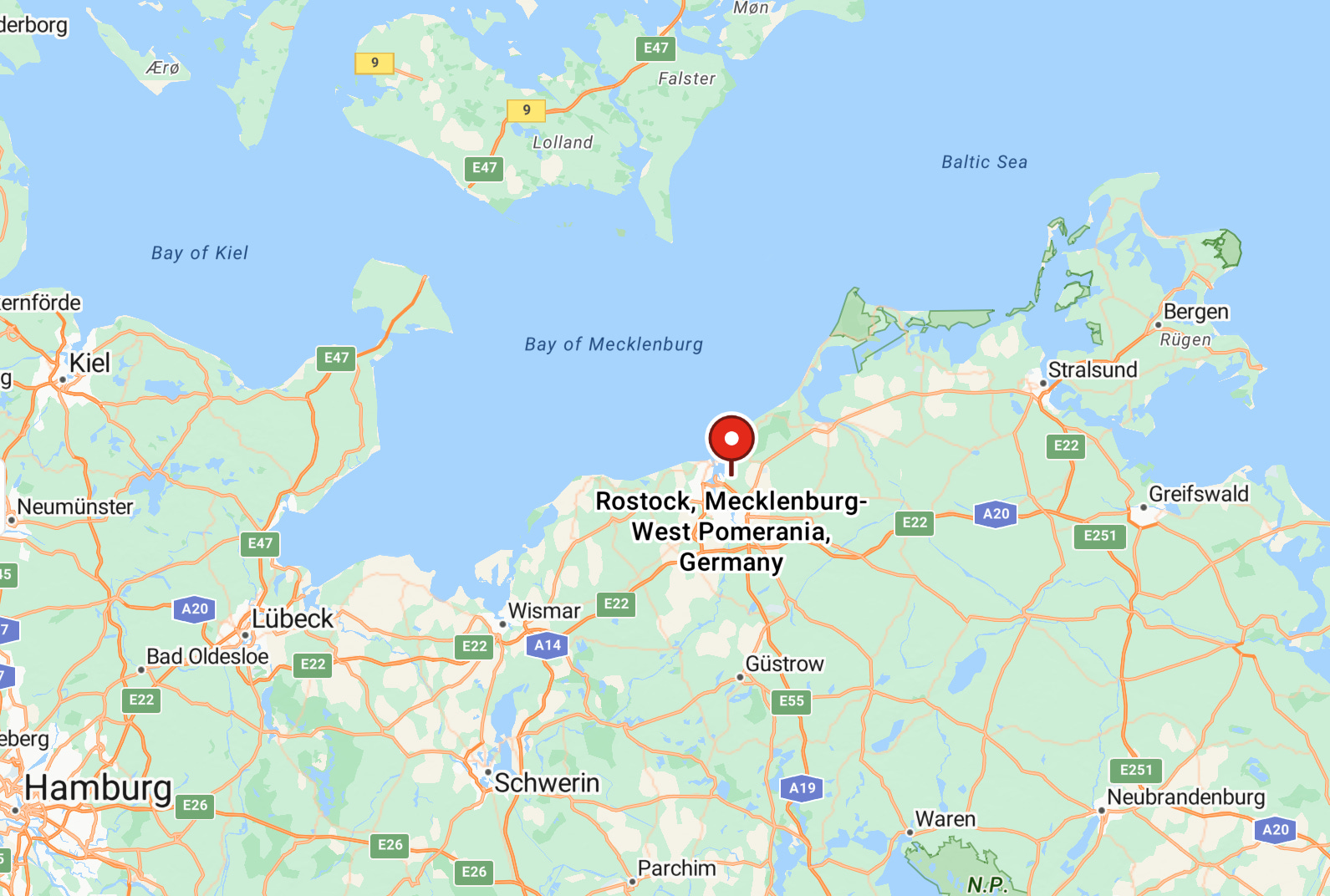
Located in the city of Rostock in the German state of Mecklenburg - Western Pomerania. The stadium can be reached easily from all parts of Rostock by public transport including but not limited to: buses (stop Ostseestadion) or the S-Bahn (stop Holbeinplatz). Public Transport is free with a valid ticket for a home match three hours before and two hours after the actual match.
The Ostseestadion has hosted a total of 10 international matches. An interesting note I pulled in my research is that away international squads have scored 7 total goals in the 10 matches compared to Germany’s 27, the Ostseestadion is a fortress for the Germans. Most notable of the international matches hosted was the 2-2 draw on the 7th of May 1980 when the Germans played the Soviet Union. I’d be ashamed if I didn’t mention the goalfest that was a 4-2 German victory over USA on the 27th of March 2002.

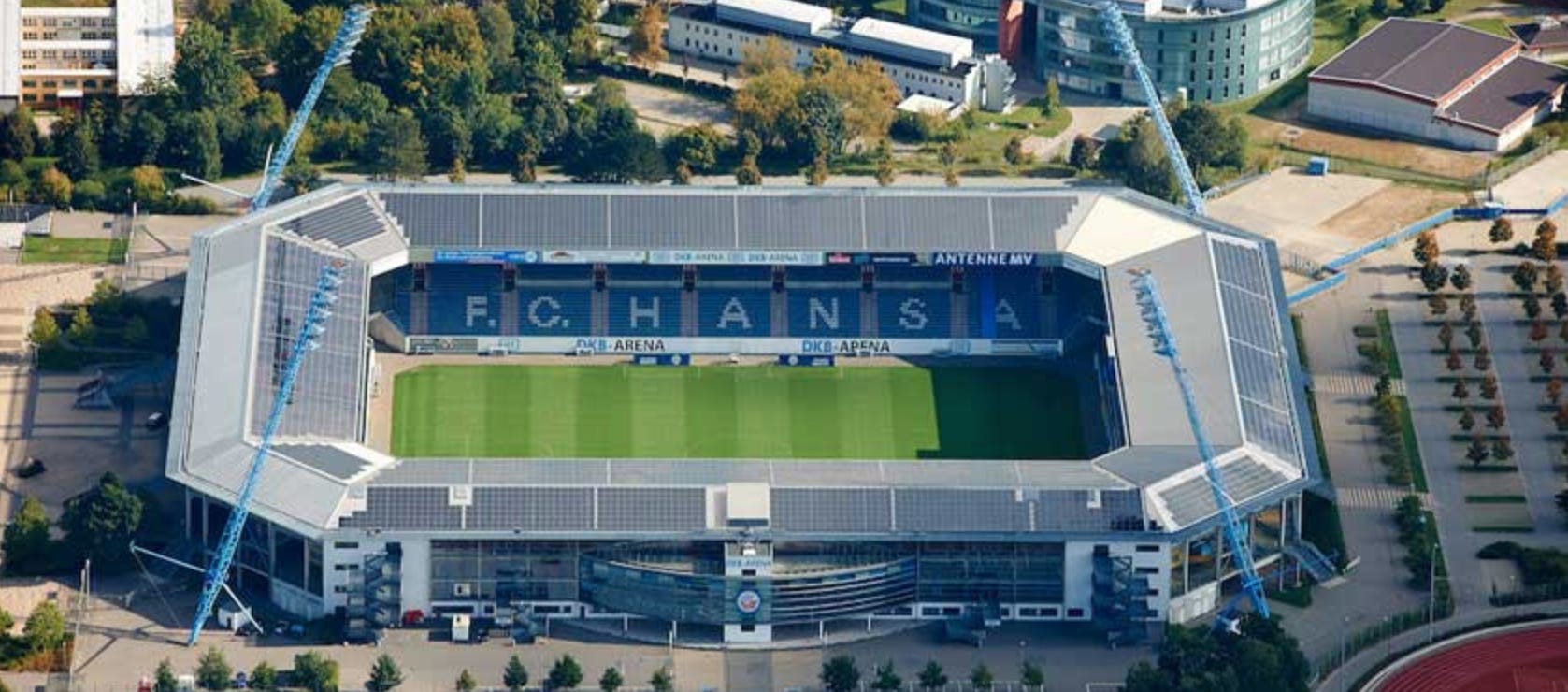
This is pretty cool to see the different variations of this stadium. Also, I love that public transportation is free to the stadium as long as you have a ticket to the match.